
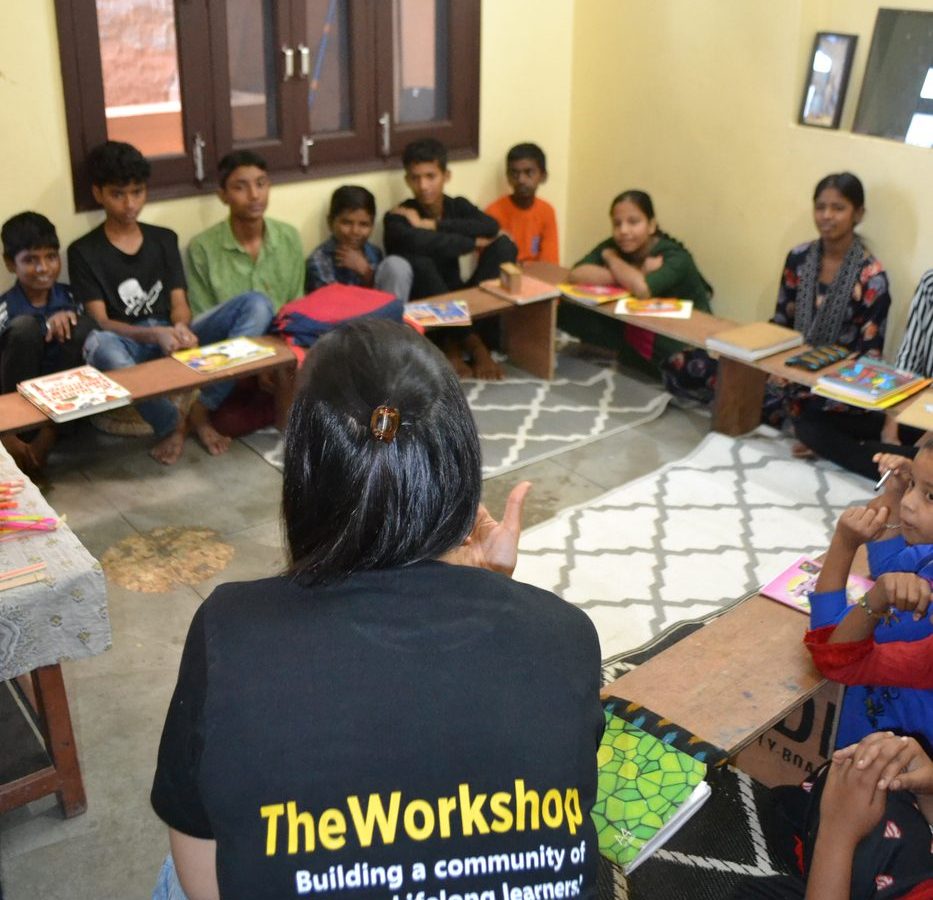
Science, Technology, Engineering and Mathematics. Four subjects. One connected way of thinking.
As an engineering graduate, there's one thing I've never quite been able to imagine: learning engineering as if these four subjects exist in isolation.
Can you understand mechanics without understanding the materials you're working with? Can you write code for a microcontroller without understanding what the hardware can actually do? Can you design a circuit without understanding electricity?
In the real world, these subjects constantly overlap. In most classrooms, we still teach them separately.
So what is STEM education, actually? And why does bringing these four subjects together matter so much?
Four words, one idea
Science is how we figure out why something behaves the way it does — why an object falls, why one material is stronger than another. Mathematics is how we quantify what we observe — how much stronger, by how many degrees, over how many metres. Engineering is what happens when we turn that understanding into something that works — a design, a fix, a solution to a real constraint. And technology, in the broadest sense, is simply the tool, device or process that gets built along the way.
On paper, that's four different subjects, four different notebooks, four different periods on a timetable. In practice, a real problem never announces itself as "a science question" or "a maths question." It just shows up — and you reach for whatever thinking gets you to an answer, usually all four, inside the same five minutes.
Here's what that looks like when it isn't hypothetical.
A catapult, a rubber band, and one stubborn Ravan
Every Dussehra, one of the builds in our line-up at TheWorkshop is a small working catapult, designed to launch a little Ravan of its own — made from nothing more exotic than ice-cream sticks, a stretch of rubber band, a few small wooden blocks, and a paper cup dressed up as the effigy itself, complete with googly eyes, a paper moustache and a glitter-paper crown.
It sounds like a craft activity. Look at what's actually happening in the build.

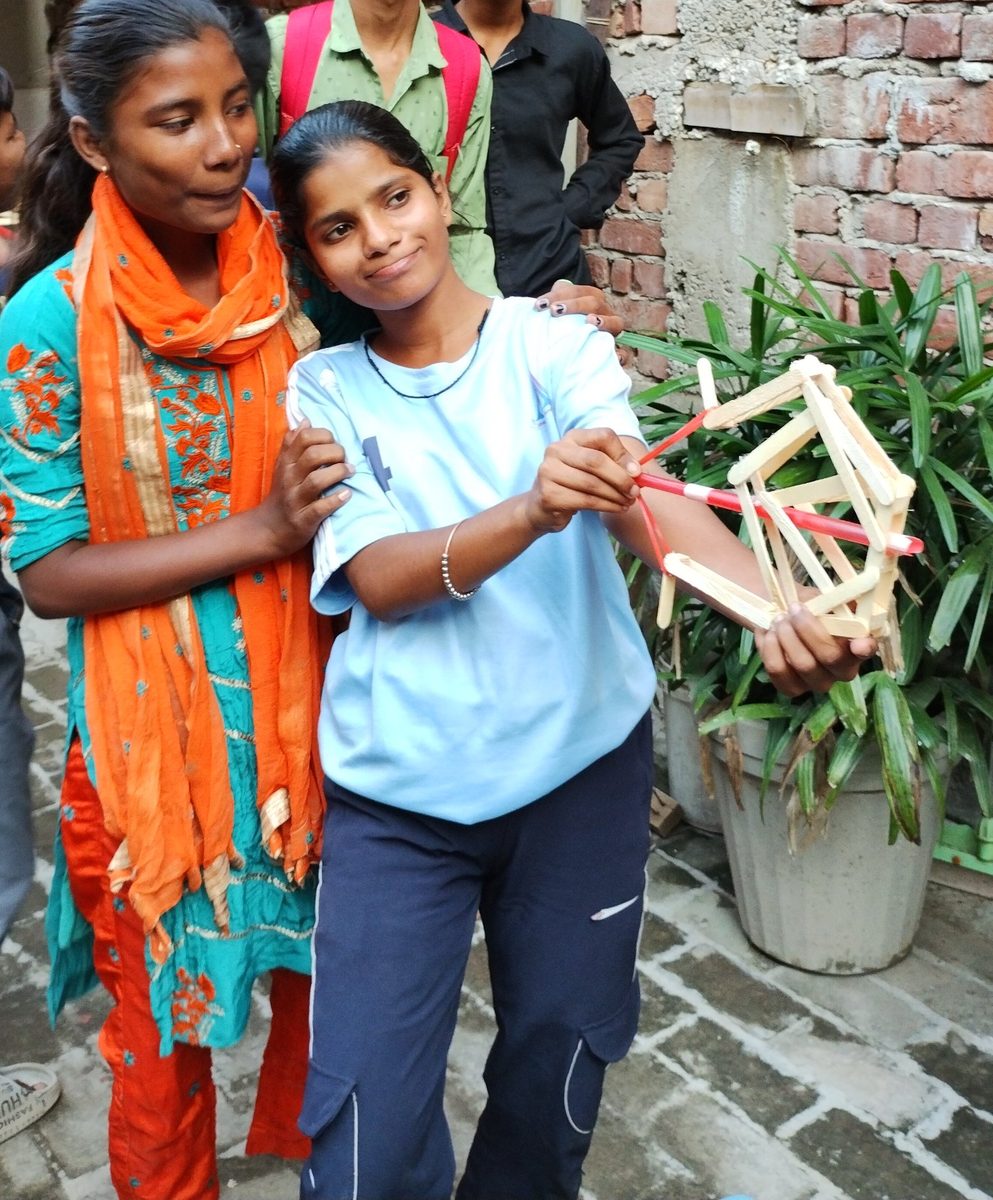
The frame is built from ice-cream sticks, bound and taped at every point where they cross, with a rubber band strung across it as the launch mechanism — pull it back, and it stores the energy that sends Ravan forward. Brace the frame too loosely, and it flexes instead of firing. Get the rubber-band tension wrong, and Ravan travels two inches instead of two feet. There's no instruction sheet that hands a child the exact bracing or the exact tension to use. That part has to be found — launch after launch, tweak after tweak.
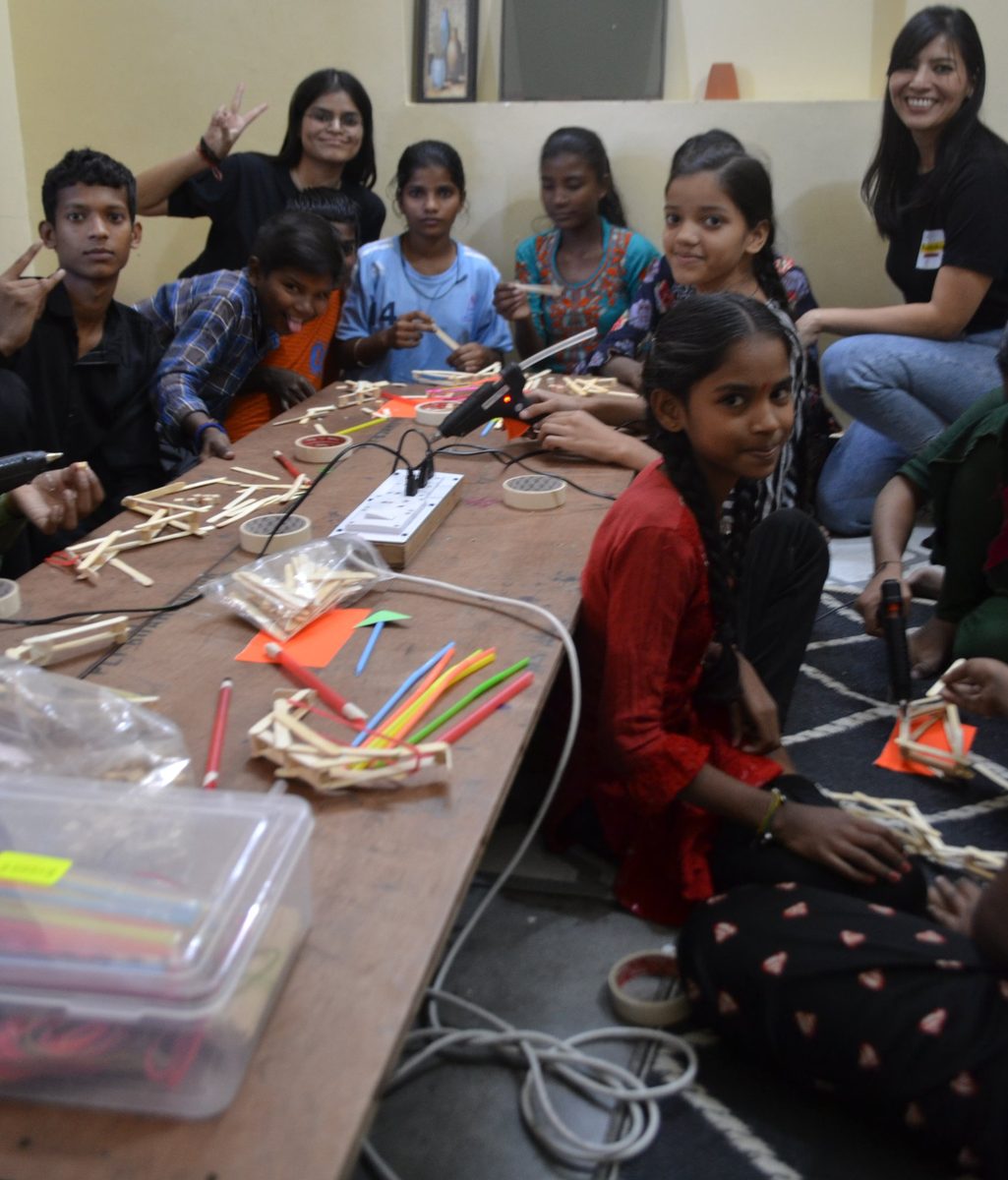
No two frames at the table looked quite the same — some braced with extra sticks at the corners, some left loose and already sagging. Nobody was told which way was correct.
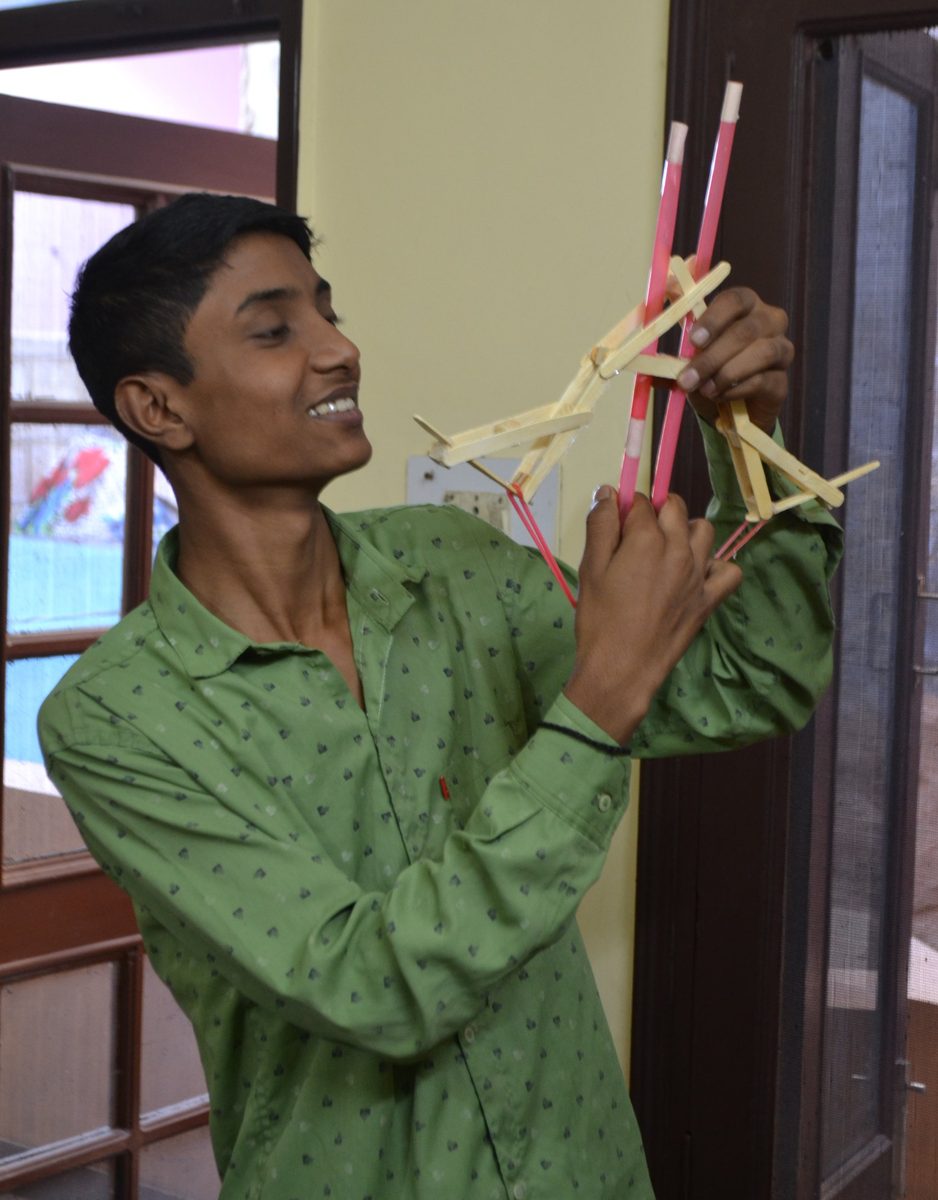
That's the whole point of a catapult. It doesn't work until the mechanics are right, and the only way to find out what "right" means is to try it, watch it fail, and adjust.
Build a lever like that and you're doing all four subjects inside the same ten minutes, whether anyone labels them or not.
It's science the moment a child notices that a heavier Ravan needs more force to launch, or that a longer arm changes how far he flies — force and leverage made visible, not abstract.
It's mathematics the moment someone starts measuring: how far did that launch actually go, how does it compare to the last attempt, does a steeper arm angle help or does it just look more dramatic.
It's engineering in every redesign — when a loose joint gets re-taped stronger, when the bracing changes shape because the first frame kept flexing instead of firing.
And it's technology in the plainest sense of the word: a tool built from ordinary material — sticks, tape, a rubber band — to do one specific job, and do it again, reliably, on the second and third try.
Nobody needs to announce which subject they're doing. The child just needs the catapult to work.
Why "more than robotics" matters
This is also why STEM, to us, was never just robotics — even though robotics is usually the first picture that comes to mind. Robotics is one place these four subjects meet. A catapult is another. A stomp rocket, built from a soda bottle and a length of PVC pipe, is another one we've written about. A bridge made of ice-cream sticks, loaded with coins until it buckles, is another.
The subject written on the timetable matters far less than whether a child got to build something, watch it not quite work, and figure out why. That's the habit we're actually trying to build. The robot, the rocket, the catapult — they're just the occasion for it.
If you ask me what STEM education really is, underneath the acronym, I'd say it's this: give a child a problem real enough that science, mathematics, engineering and technology show up together — the way they do everywhere outside a classroom — and then get out of the way long enough for them to find out what works.
A catapult doesn't care which subject you think you're studying. It only cares whether Ravan clears the table.
Every EduLab project is built to connect subjects, not separate them.
The catapult is one small example of how we design experiential, grade-appropriate STEM projects — for classrooms across Chandigarh and PAN India — where science, maths, engineering and technology show up together, not as four separate worksheets.
See how EduLab works →