
From the workbench to the national stage.
Every competition robot starts the same way every classroom project does — a design brief, a prototype, a failure, a fix. Competitions are not a separate track at TheWorkshop; they're where the Engineering Design Process gets tested against the clock and against every other team in the room. Results so far: a national rank of #11 at the World Robot Olympiad — from a student who joined with zero electronics or coding knowledge — and a Top 10 finish at TechnoXian, India's largest robotics & tech championship.
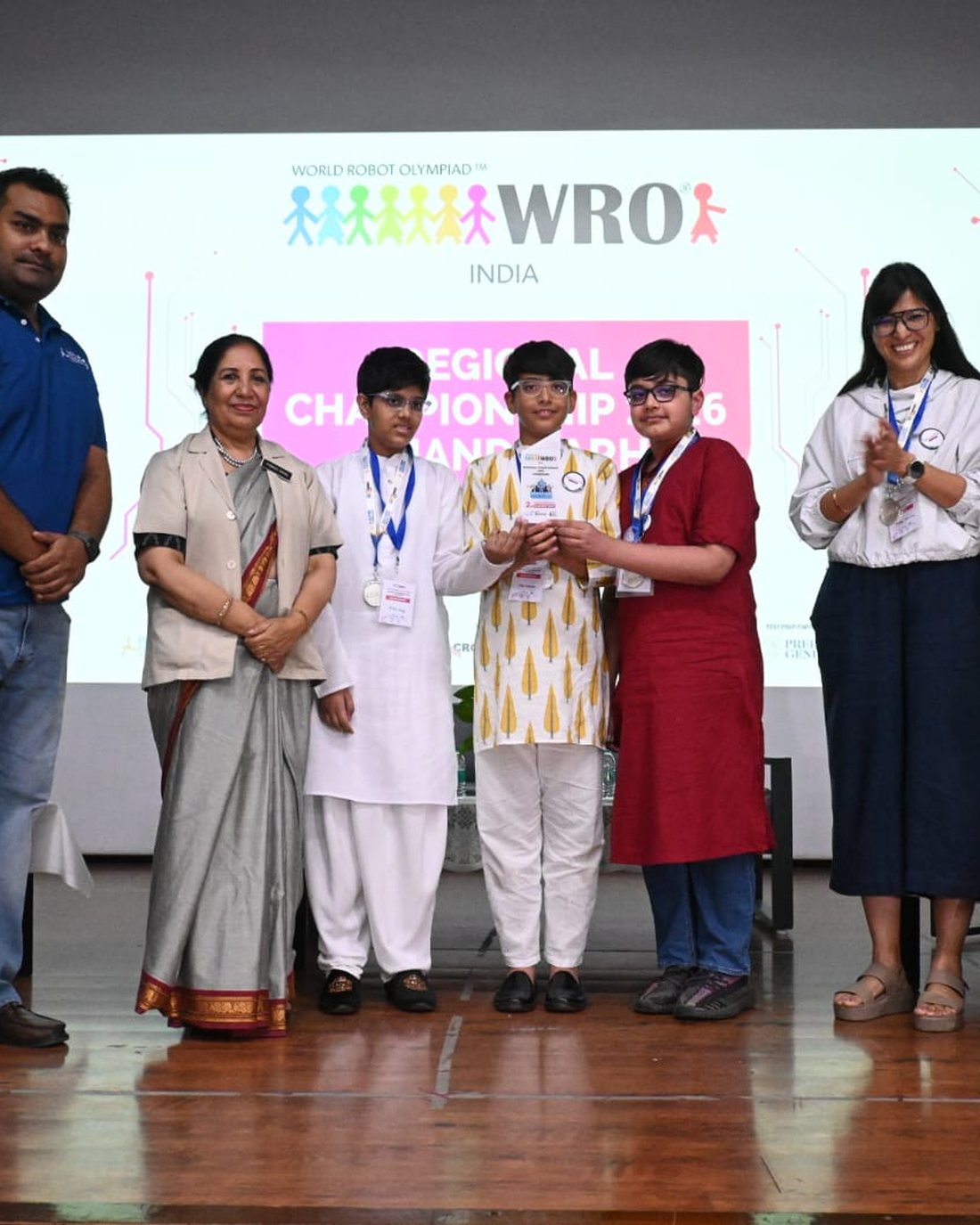
The moment that makes the re-testing worth it — Regional Championship 2026, Chandigarh.
Different stages. The same rigour, every time.

World Robot Olympiad (WRO)
National & international qualifying roundsOne of the world's largest robotics competitions for school students — teams design, build and program an autonomous robot to solve a themed challenge.
TechnoXian
India's largest robotics & tech championshipA multi-category national championship spanning robotics, drones and emerging tech — our students have placed in the Top 10 nationally.

First Lego League (FLL)
Early-stage mentorshipWe mentor teams preparing for FLL-style challenges as part of building a broader competition pipeline, alongside WRO and TechnoXian.

World STEM & Robotics Olympiad (WSRO)
Regional & national roundsA newer multi-city STEM and robotics circuit — part of how we keep students' competition options current beyond the established national events.

VEX Robotics
Global competitive robotics circuitA structured, build-and-code robotics competition platform used worldwide — part of the pipeline for students ready for a stiffer technical challenge.

Design for Change (DFC)
Global social-impact design challengeStudents apply the "Feel, Imagine, Do, Share" design process to a real problem in their own community — creative thinking in service of other people, not just a circuit board.
We also prepare students for other respected national platforms — including INSPIRE-MANAK (Dept. of Science & Technology, Govt. of India), Smart India Hackathon Junior, Atal Tinkering Labs, and the National Children's Science Congress — so competition exposure is never limited to just the six above.
And before any of this — every student first presents to parents and peers in-house. In-house showcases and hackathons run every batch, every term; it's the first "stage" in every competitor's journey.
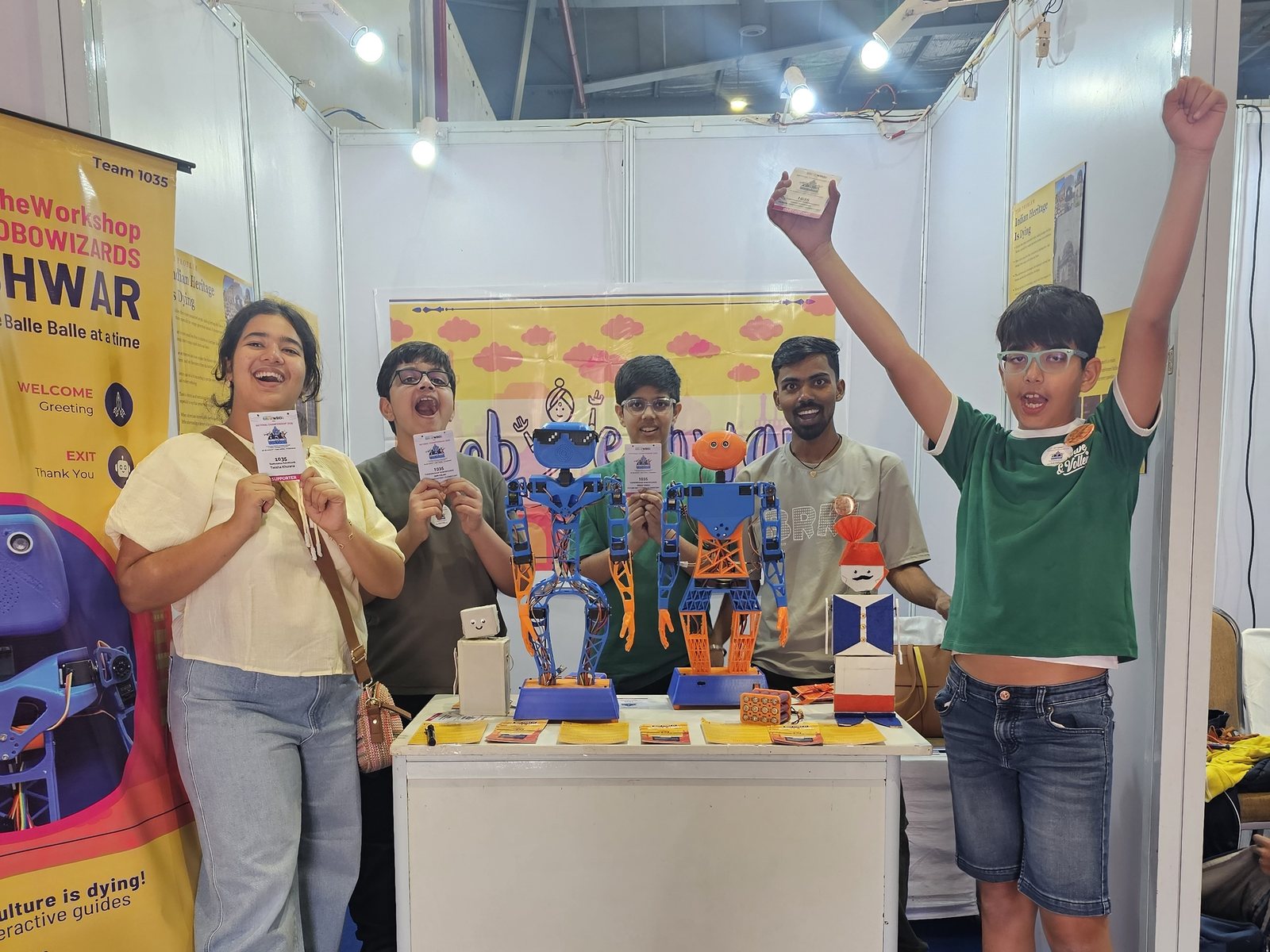
Our students celebrate their competition builds with their mentor.
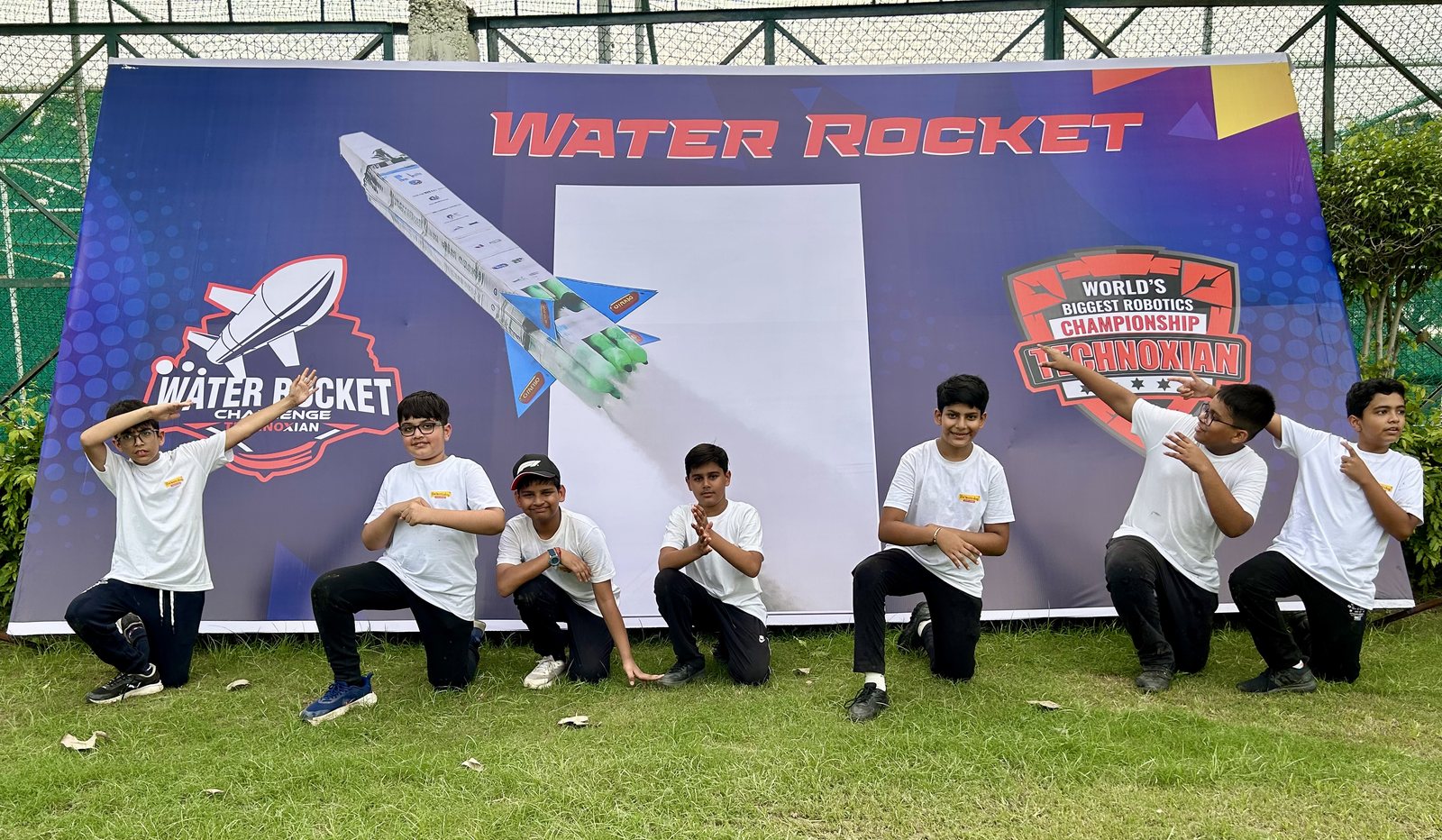
Our Water Rocket Challenge team at TechnoXian — India's largest robotics & tech championship.
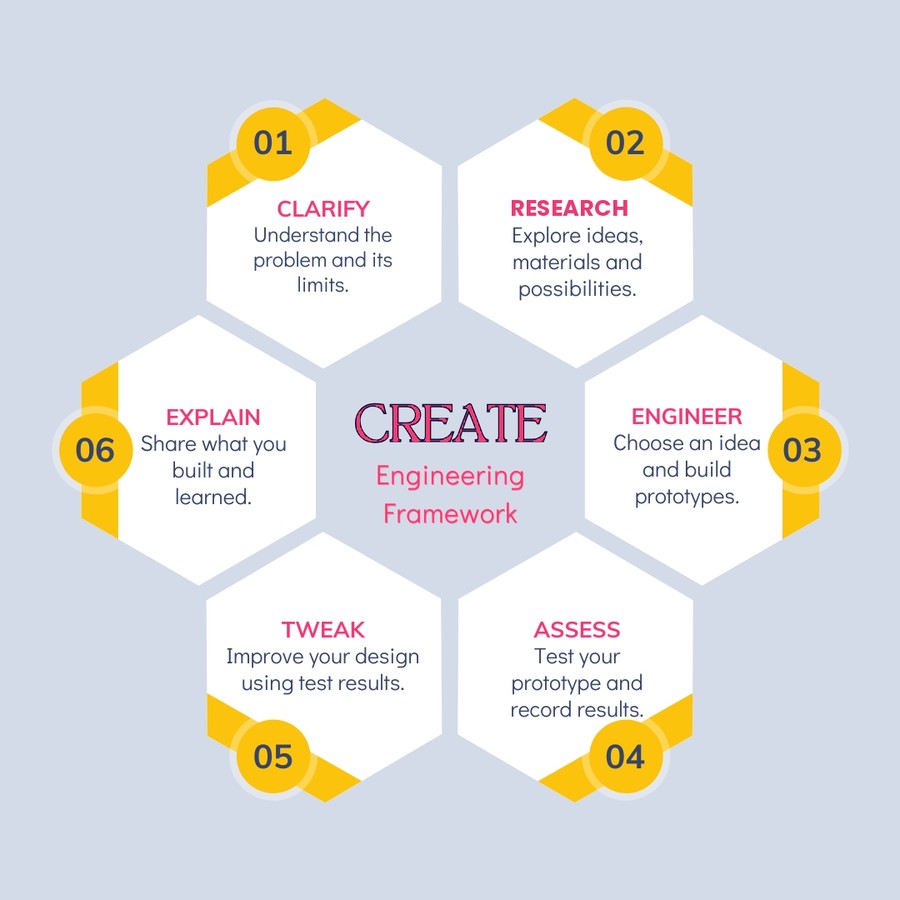
The CREATE Engineering Framework — six steps our students repeat on every build.
The same Engineering Design Process as every classroom — under a deadline.
A competition entry isn't handed to a student as a kit to assemble. It's designed, built, tested, and rebuilt — on a clock, against a published rulebook, with a real chance of failing on stage. That pressure is the point.
We call it the CREATE framework, and it isn't a competition-only tool — it's the same six moves a student runs through on a Friday-afternoon EduLab challenge. That's why moving from classroom to championship floor never feels like learning a new process; it's the same one, just under a published rulebook and a clock.
Parents of students who've competed.
Shourya built a water rocket completely from scratch for TechnoXian and placed in the Top 10 nationally. But what's stayed with us is the mindset — he debugs and re-tests on his own now, without waiting for anyone to tell him what's wrong.
Arnav joined with zero knowledge of electronics or coding. Today he designs and programs his own Arduino-based robots independently, and placed Rank 11 nationally at the World Robot Olympiad. That's a journey we didn't expect this fast.
Four steps, over seasons — not weeks.
Start in the Club
Join a regular robotics club or batch first — competitions build on fundamentals, not the other way round.
Pick a Circuit
WRO, TechnoXian or an FLL-style challenge — mentors help match the student to the right fit.
Build, Test, Repeat
Weeks of prototyping and re-testing against the real rulebook, with a mentor through every failed run.
Compete
Step onto the national stage — win or lose, the debrief afterward is where the real learning lands.
What's been verified, so results aren't just our word for it.
AMBH
#11
XIAN
Ready to find out what your child could build?
Start in a regular robotics batch — the competition circuit is the next step, not the first one.